Blood Thinners: Everyday Safety Tips for Australian Adults
Blood thinners reduce the risk of dangerous clots, but they also change how your body handles bleeding. These practical habits can help you stay safe at home, at work and when you're out and about.
- Take your blood thinner at about the same time every day, and don't double up after a missed dose without advice.
- Check with your pharmacist before taking anti-inflammatories, extra aspirin, supplements or herbal products.
- Protect yourself from cuts and falls with gloves, an electric razor, good lighting and non-slip mats.
- Tell your dentist, surgeon and other health professionals you take a blood thinner, and never stop it without medical advice.
- Go to emergency for any head injury, black stools, vomiting blood or bleeding that won't stop.
What blood thinners do, and what they don't
'Blood thinner' is a handy nickname, but it's a little misleading. These medicines don't make your blood watery. They slow the clotting process so that clots are less likely to form in your veins, heart or arteries. Doctors commonly prescribe them for atrial fibrillation, deep vein thrombosis, pulmonary embolism, mechanical heart valves, and after some types of surgery.
There are two broad groups. Anticoagulants, such as warfarin, apixaban and rivaroxaban, act on clotting proteins. Antiplatelet medicines, such as low-dose aspirin or clopidogrel, make platelets less sticky. They are not interchangeable, and each comes with its own rules. If you're not sure which type you take, ask your pharmacist. It's a quick question and the answer shapes much of what follows.
The trade-off is simple. You gain protection against stroke or clots, and you accept a higher chance of bleeding. Most day-to-day safety is about keeping that second part small.
Build a dose routine that sticks
Blood thinners work best when the level in your body stays steady. Taking them at roughly the same time each day matters more than which time you pick. Tie it to something you already do, like brushing your teeth or putting the kettle on for the evening cuppa.
Use a system, not memory
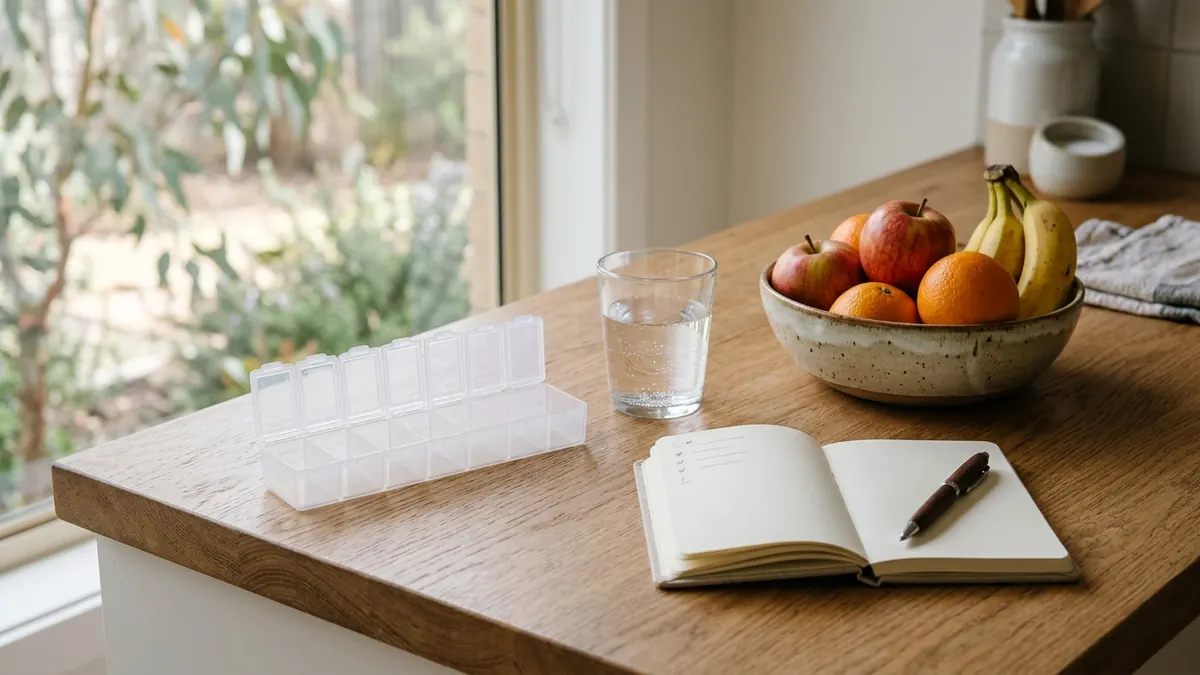
A weekly pill organiser or a pharmacy-prepared blister pack makes it obvious whether you've taken today's dose. A phone alarm helps too. If you share a home with someone, a tick-off chart on the fridge can settle the 'did I or didn't I?' argument at 9 pm.
Never double up to make up for a missed dose unless your doctor or pharmacist has told you to. The right response to a missed dose differs between medicines, so check the Consumer Medicine Information leaflet or call your pharmacist.
If you take warfarin
Warfarin needs regular INR blood tests, and the dose is adjusted to your results. Keep those appointments even when you feel fine. Vitamin K affects how warfarin works, so you don't need to avoid leafy greens, but try to keep your intake fairly consistent from week to week. A big change, such as starting daily green smoothies, is worth mentioning to your doctor beforehand.
Newer anticoagulants don't need INR monitoring and aren't affected by vitamin K in the same way, but regular check-ups for kidney function and dose suitability still matter.
Preventing cuts, bumps and falls
You don't need to wrap yourself in cotton wool. A few small changes cut the odds of an injury turning into a problem.
Around the house
Use a soft toothbrush and an electric razor instead of a blade. Wear gloves for gardening and when handling knives or secateurs. Keep a sharp knife sharp, since blunt ones slip. Fix loose rugs, add a non-slip mat in the shower, and make sure hallways and stairs are well lit at night.
Falls are the main worry, especially for older adults. A hit to the head while on a blood thinner can cause bleeding inside the skull, sometimes hours later with no obvious sign at first.
Sport and being active
Walking, swimming, cycling and gentle gym work are generally encouraged, and staying active is good for your heart. Contact sports like football, rugby or martial arts carry more risk. Wear a helmet when cycling, and talk with your GP about which activities suit you.
If you do cut yourself
Apply firm, steady pressure with a clean cloth for at least ten minutes without peeking. Lifting the cloth to check restarts the clock. If bleeding hasn't slowed after that, seek medical help.
Check before you add anything new
Many everyday products interact with blood thinners. Anti-inflammatory painkillers such as ibuprofen, naproxen and diclofenac can raise bleeding risk, particularly in the stomach. Extra aspirin does the same. For headaches or aches, paracetamol is often the first choice for people on anticoagulants, but ask your pharmacist about the right dose for you, since regular heavy use can affect warfarin results.
Complementary products count as well. Fish oil, ginkgo, garlic tablets, turmeric supplements, St John's wort and some herbal teas can change how blood thinners behave or add to bleeding risk. Antibiotics, antifungals and some cholesterol or heart-rhythm medicines can also interact.
The simplest habit is to say, 'I take a blood thinner' every time you buy something over the counter. Pharmacists are used to this question and can check your full medicines list in a minute or two.
Alcohol deserves a mention too. Occasional light drinking is usually fine for many people, but heavy or binge drinking raises both bleeding and fall risk, and can disturb warfarin control. Your GP can give advice based on your health.
Tell everyone who treats you
Your dentist, physiotherapist, podiatrist, skin-check clinic and anyone doing a procedure should know about your medicine. A tooth extraction, a skin biopsy or a colonoscopy may need a plan for pausing or adjusting your dose. Never stop a blood thinner on your own, though. Stopping suddenly can raise your risk of a clot or stroke, and any pause should be directed by the prescriber.
Carry a medicines card in your wallet or keep a list on your phone with drug names, doses and your doctor's contact details. Consider a medical alert bracelet if you take warfarin or have a mechanical heart valve. If you're travelling, pack your medicine in your carry-on bag with a few spare days' supply, and ask your doctor about blood tests or timing across time zones.
If you become pregnant or are planning to, speak to your doctor early. Some blood thinners, warfarin in particular, aren't suitable during pregnancy and need to be changed under medical guidance.
Know the warning signs
Minor bruising and the odd nosebleed can happen on these medicines. Some signs need prompt attention, though.
Call 000 or go to the nearest emergency department if you have a head injury (even if you feel okay), a sudden severe headache, confusion, weakness on one side, vomiting blood, or bleeding that won't stop with firm pressure. Black, tarry stools or red blood in your stool or urine also need urgent assessment.
Contact your GP or pharmacist the same day for frequent nosebleeds, bleeding gums that don't settle, unusually heavy periods, large unexplained bruises, or unusual tiredness and paleness. Don't wait for your next scheduled appointment.
Your pharmacist can review your whole medicines list, explain your leaflet in plain language and help set up a dose routine. Used with care, blood thinners are a safe and effective part of looking after your health, and small daily habits are what keep them that way.
Frequently asked questions
Can I take ibuprofen while on a blood thinner?
Usually it's best to avoid it. Ibuprofen and similar anti-inflammatories can increase the risk of bleeding, especially in the stomach. Ask your pharmacist or GP about a safer option for pain, which is often paracetamol at the correct dose.
What should I do if I miss a dose?
It depends on the medicine and how long ago the dose was due. Check the leaflet that came with your medicine or call your pharmacist. Don't take a double dose unless a health professional has told you to.
Do I need to avoid green vegetables if I take warfarin?
No. Leafy greens are healthy. The aim is to eat a fairly consistent amount week to week so your INR stays stable. Let your doctor know before making big changes to your diet.
Is it safe to drink alcohol on blood thinners?
Light, occasional drinking may be acceptable for some people, but heavy or binge drinking raises bleeding and fall risks. Your GP or pharmacist can advise you based on your medicine and health.
Medical disclaimer: This information is general in nature and is not a substitute for advice from your doctor or pharmacist. Prescription-only medicines are supplied only against a valid prescription.