Contraception Choices in Australia: A Plain-English Guide
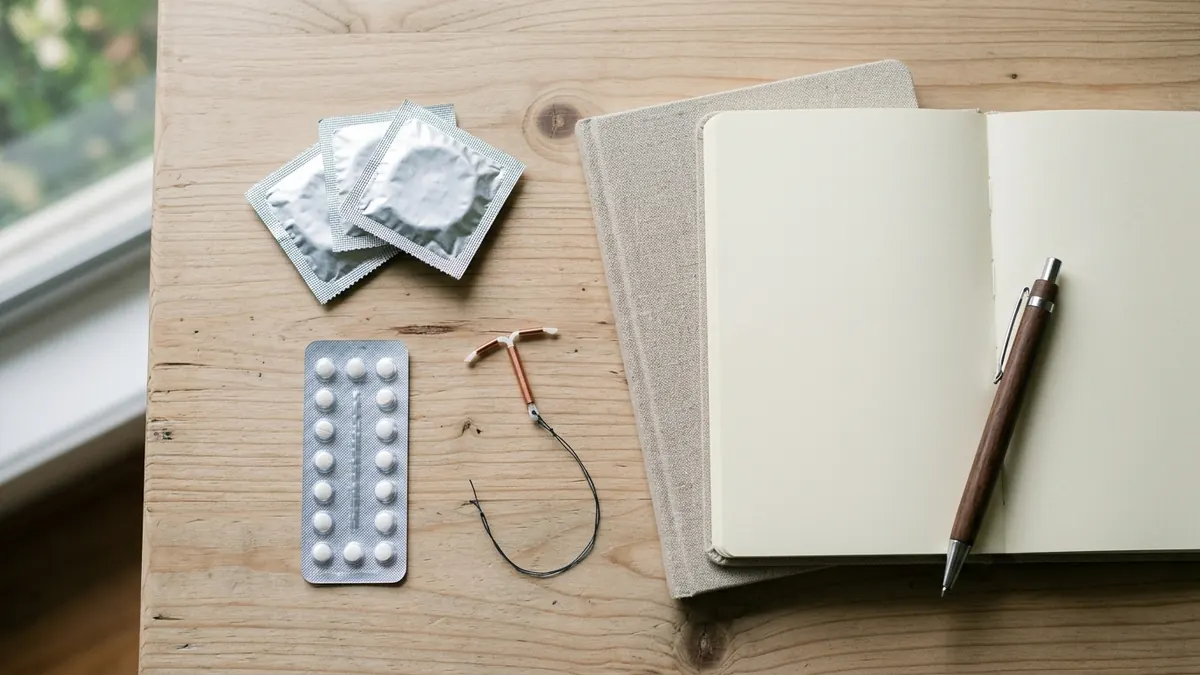
There are more than a dozen contraception options available in Australia, and the best one depends on your health, your habits and your plans. This guide explains how the main methods work, what trade-offs to expect and who can help you choose.
- No method suits everyone, so match it to your health, habits and plans.
- Condoms are the only option that also reduces the risk of most STIs.
- IUDs and implants are the most effective methods in everyday use because they do not rely on daily action.
- Emergency contraception is available from pharmacies, and a copper IUD can also work within five days.
- Your GP or pharmacist can check your history and advise which options are safe for you.
Start with what you need the method to do
There is no single best form of contraception. There is only the one that suits you right now, and that can change over time. Before comparing options, it helps to jot down a few priorities. How important is it that the method is very effective? Would you rather take something daily or have something you can forget about for years? Do you need protection against sexually transmissible infections (STIs)? Are you hoping for lighter periods, or hoping not to change your cycle at all?
Take two examples. A shift worker who often misses meals and sleeps at odd hours might find a daily pill hard to keep up. Someone who gets painful, heavy periods might be glad of a method that also lightens bleeding. Your health history matters too, which is why a conversation with a GP, sexual health nurse or pharmacist is worth having before you commit.
Short-acting methods you manage yourself
These methods put you in control, but they rely on being used correctly each time or each day. That is why their real-world effectiveness is lower than their best-case figures.
Condoms
External and internal condoms are sold in supermarkets, pharmacies and vending machines without a prescription. They are the only contraception that also lowers the risk of most STIs. With typical use, around 13 in 100 people relying on external condoms will become pregnant in a year. With perfect use, it is about 2 in 100. Many people combine condoms with another method for added protection.
The pill and the vaginal ring
The combined pill contains two hormones, oestrogen and progestogen. The progestogen-only pill, sometimes called the mini pill, contains just one. With typical use, roughly 7 to 9 in 100 people get pregnant in a year, mostly because pills get missed. Timing rules differ. Some progestogen-only pills must be taken within three hours of the same time each day, while others allow a longer window. Check the leaflet or ask your pharmacist.
Combined pills are not suitable for everyone. Migraine with aura, a past blood clot, high blood pressure and smoking at older ages can all rule them out. The vaginal ring is also a combined hormonal method. It stays in for three weeks and is removed for one, so it suits people who prefer not to think about a daily tablet.
Withdrawal and fertility tracking
Pulling out before ejaculation and tracking your fertile days are less reliable than most other options. Cycles can vary, and sperm can survive for several days. Some people use these methods successfully, particularly with good training from a qualified fertility awareness educator, but they are a higher-risk choice if avoiding pregnancy is a priority.
Long-acting reversible contraception
Long-acting reversible contraception, often shortened to LARC, covers IUDs, the implant and the injection. The first two are more than 99% effective in real-world use, because once they are in place there is nothing to remember. Fertility generally returns soon after an IUD or implant is removed.
Intrauterine devices (IUDs)
A hormonal IUD releases a small amount of progestogen and lasts about five to eight years depending on the type. Many people notice lighter periods, and some stop bleeding altogether. A copper IUD has no hormones and can last up to five to ten years, depending on the device. It can make periods heavier or more crampy, particularly in the first few months.
Insertion is done by a trained doctor or nurse and can be uncomfortable. Ask in advance about pain relief. Rare risks include the device slipping out, infection shortly after insertion, and, very rarely, perforation of the uterus.
The implant and the injection
The implant is a small rod placed under the skin of the upper arm after local anaesthetic. It works for up to three years. The most common complaint is unpredictable bleeding, which can settle over time or stay irregular. The injection is given every 12 weeks. It suits people who want a private, no-device option, but it can delay the return of fertility by several months after stopping. Longer-term use also needs a conversation about bone health.
Permanent options
Vasectomy and tubal ligation are intended to be permanent. A vasectomy is a short procedure, often done under local anaesthetic, that blocks the tubes carrying sperm. A follow-up semen test is needed to confirm it has worked, and until then another method must be used. Tubal ligation involves surgery under general anaesthetic to block or remove the fallopian tubes.
Both are very effective, but reversal is difficult and not always successful. Doctors will usually ask about your circumstances and talk through alternatives, because some people later change their minds. For many couples, a vasectomy is a simpler and lower-risk procedure than female sterilisation, so it is worth discussing both.
Emergency contraception
Emergency contraception is for situations such as a split condom, missed pills or sex without protection. It is not meant to replace regular contraception. Levonorgestrel emergency pills are available from Australian pharmacies without a prescription and work best the sooner they are taken, generally within 72 hours. Another type of emergency pill can be used for up to five days, and your pharmacist can explain which option may suit you.
A copper IUD fitted within five days is the most effective emergency method, and it can then stay in place as ongoing contraception. Some emergency pills may be less reliable at higher body weights, so tell the pharmacist about your situation. If your period is more than a week late afterwards, take a pregnancy test.
Costs, access and who can help
Costs vary a lot. Condoms are cheap and easy to buy. Many contraceptive pills are subsidised through the Pharmaceutical Benefits Scheme, and Medicare rebates apply to a range of consultations and procedures, including IUD and implant insertion. Even so, there can be out-of-pocket costs for the appointment or the device, so ask about prices when you book.
You can get advice from a GP, a sexual and reproductive health clinic, a family planning organisation in your state or territory, or a pharmacist. Telehealth is also an option for many prescriptions. In some states, pharmacists can continue supply of the oral contraceptive pill under set conditions, so it is worth asking your local pharmacy.
Come to the appointment with a few details: your medical history, any medicines you take (including supplements, since some interact with hormonal methods), your family history of clots or breast cancer, and what you want from your periods. A good clinician will lay out the trade-offs and let you decide.
Frequently asked questions
Which contraception is the most effective?
IUDs and the implant are the most effective reversible methods, with fewer than 1 in 100 users becoming pregnant each year. Vasectomy and tubal ligation are also highly effective but intended to be permanent.
Do I need a prescription for contraception?
Condoms and some emergency contraceptive pills can be bought without one. The pill, ring, implant, injection and IUDs need a prescription or a clinician to supply or fit them. Some pharmacists can continue your pill supply, depending on your state.
Will hormonal contraception affect my future fertility?
Fertility usually returns soon after stopping the pill, ring, implant or IUD. The injection can delay it by several months. If you are planning a pregnancy, talk to your GP about when to stop and what to expect.
Can I use contraception while breastfeeding?
Yes, but some choices suit this stage better than others. Progestogen-only methods, copper IUDs and condoms are commonly used, while combined hormonal methods are often avoided early on. Ask your GP, midwife or pharmacist for advice.
Medical disclaimer: This information is general in nature and is not a substitute for advice from your doctor or pharmacist. Prescription-only medicines are supplied only against a valid prescription.