High Blood Pressure After 50: A Practical Guide for Australians
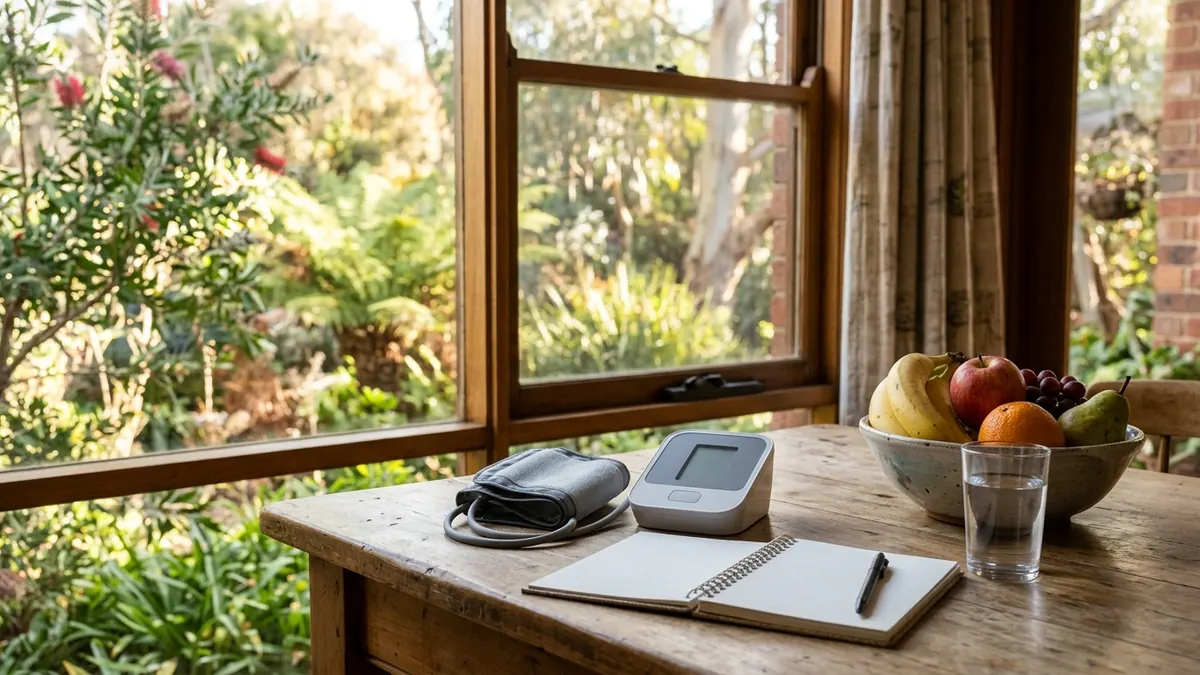
Blood pressure often creeps up with age, and most people feel nothing while it happens. This guide covers how to measure it properly, which daily habits make a difference, and how your GP and pharmacist can help.
- High blood pressure usually causes no symptoms, so regular checks matter, especially from age 45.
- A week of home readings with a validated upper-arm cuff gives your GP a clearer picture than a single clinic reading.
- Cutting hidden salt in bread, sauces and processed foods, staying active and limiting alcohol can all lower your numbers.
- Don't stop blood pressure medicines without advice. Talk to your GP or pharmacist if side effects bother you.
- Ask your pharmacist before taking pain relief or cold and flu products, as some can raise blood pressure.
Why blood pressure tends to rise after 50
Arteries stiffen gradually as we age, so the heart has to push against more resistance. Add decades of weight gain, less activity, salt-heavy eating and perhaps a few too many drinks, and it's easy to see why about one in three Australian adults has high blood pressure, with rates climbing steeply from midlife.
The tricky part is that hypertension rarely announces itself. Many people feel perfectly well until a routine check picks it up. Left uncontrolled over years, it raises the risk of stroke, heart attack, kidney disease and dementia, which is why finding it early matters.
What the numbers mean
A reading has two figures: systolic (the pressure as the heart beats) over diastolic (the pressure between beats). In a clinic, a reading of 140/90 mmHg or higher is generally considered high, though your GP may aim lower if you have diabetes, kidney disease or other heart risk factors. After 50 the top number is often the one that drifts up, and it's the one doctors pay close attention to. Your target is something to agree with your GP rather than guess at.
Measure it properly, at home and in the clinic
One reading in a busy waiting room can mislead. Some people run high only at the doctor's (white coat effect), while others look fine in the clinic but are high at home. Home monitoring sorts out which is which.
Choose a validated upper-arm cuff. Your pharmacist can help you pick one and check that the cuff size fits. Wrist devices tend to be less reliable.
A simple home routine
Sit quietly for five minutes with your back supported, feet flat and arm resting at heart height. Avoid coffee, smoking and exercise for 30 minutes beforehand. Take two readings a minute apart, morning and evening, for seven days, then write them down and bring the record to your GP. Averages across a week are far more useful than a single odd number.
If you're 45 or older (30 or older for Aboriginal and Torres Strait Islander people), ask your GP about a Medicare-subsidised Heart Health Check. It looks at blood pressure, cholesterol and your wider risk of heart disease.
Food and salt: where the sodium really comes from
Australians eat roughly double the recommended amount of salt, which is under about 5 grams a day (around one teaspoon). Surprisingly, most doesn't come from the salt shaker. Bread, breakfast cereal, processed meats, sauces, stock, sausage rolls, pizza and takeaway all add up.
Small swaps work better than a total overhaul. Compare labels and pick the option with less sodium per 100 g. Rinse canned beans and vegetables. Cook with garlic, lemon, herbs and spices instead of stock cubes. Over a few weeks your taste adjusts, and food that once seemed normal starts to taste salty.
Eating patterns such as the DASH diet, which is rich in vegetables, fruit, wholegrains, legumes, nuts and low-fat dairy, have been shown to lower blood pressure. Foods high in potassium, like bananas, spinach and sweet potato, can help too. But if you have kidney problems or take certain blood pressure tablets, ask your GP or pharmacist before increasing potassium or using salt substitutes, because these often contain potassium chloride.
Movement, alcohol, weight and sleep
Regular activity can lower systolic pressure by several points, which is comparable to what some medicines achieve. Aim for about 150 minutes of moderate activity a week, such as brisk walking, swimming, cycling or gardening, plus two sessions of muscle-strengthening. If that sounds like a lot, start with ten-minute walks after meals and build up.
Alcohol matters more than many people expect. Current NHMRC guidelines suggest no more than 10 standard drinks a week and no more than four on any day. Cutting back often drops blood pressure within weeks.
Carrying extra weight around the middle puts pressure on the system, and losing even 3 to 5 kilograms can make a measurable difference. Sleep plays into this as well. Loud snoring, gasping at night or constant daytime tiredness could point to sleep apnoea, which is strongly linked to hypertension. It's worth raising with your GP, as it can be tested and treated.
Smoking doesn't cause a lasting rise in resting pressure, but it damages blood vessels and multiplies cardiovascular risk. If you smoke, quitting is one of the most useful things you can do. Your pharmacist can talk through your options.
Blood pressure medicines: what to know
Lifestyle changes help a lot, but many people over 50 also need medicine. That isn't a failure. Your family history and genes affect your blood pressure as much as your habits do. Your GP will choose from several types of tablet and may combine two at low doses, which often causes fewer side effects than one at a high dose.
Take them consistently
Blood pressure tablets work only while you keep taking them, and you won't feel any different when they're doing their job. That is why people stop. If you notice a dry cough, swollen ankles, dizziness when standing or tiredness, tell your GP or pharmacist instead of quitting. Often a change of dose or type solves the problem. A dose administration aid or a phone reminder can also help if you take several medicines.
Everyday products that can push pressure up
Anti-inflammatory painkillers (like ibuprofen and diclofenac) can raise blood pressure and blunt the effect of some tablets. Cold and flu products containing pseudoephedrine can do the same. Large amounts of black liquorice, some energy drinks and certain herbal products may also have an effect. Before buying anything over the counter, ask your pharmacist whether it suits you.
When to get help, and who can support you
Call 000 straight away if you have chest pain, sudden weakness or numbness on one side, facial droop, trouble speaking, vision loss, or a sudden severe headache. These can signal a stroke or heart attack, whatever your reading says.
Book a GP appointment if your home readings average 135/85 or higher over a week, or if a single reading is much higher than usual. If you're already on treatment, check in at least every few months until your pressure is steady, then at least yearly.
Your community pharmacist is a handy, easy-to-reach part of the team. They can check your pressure, review your medicines for interactions, explain how to use a home monitor and help you keep on top of repeat prescriptions. Between them, your GP and pharmacist can build a plan that fits your health and your routine.
Frequently asked questions
What is a healthy blood pressure for someone over 50?
Many adults aim for a clinic reading below 140/90 mmHg, and a lower target may suit people with diabetes, kidney disease or other heart risks. Targets differ from person to person, so ask your GP what is right for you.
Can I lower my blood pressure without medicine?
For some people with mildly raised readings, lifestyle changes such as eating less salt, being more active, limiting alcohol and losing excess weight are enough. Others need medicine as well. Your GP can advise based on your readings and overall heart risk.
How often should I check my blood pressure at home?
When your GP first asks you to monitor, take two readings each morning and evening for seven days. Once your pressure is stable, your GP may suggest occasional checks instead, such as a few days each month.
Is it safe to stop my tablets if my readings are normal?
Normal readings usually mean the tablets are working, not that you no longer need them. Stopping suddenly can cause your pressure to rise again. Speak with your GP before changing anything.
Medical disclaimer: This information is general in nature and is not a substitute for advice from your doctor or pharmacist. Prescription-only medicines are supplied only against a valid prescription.