Seasonal Flu in Australia: Prevention and Recovery at Home
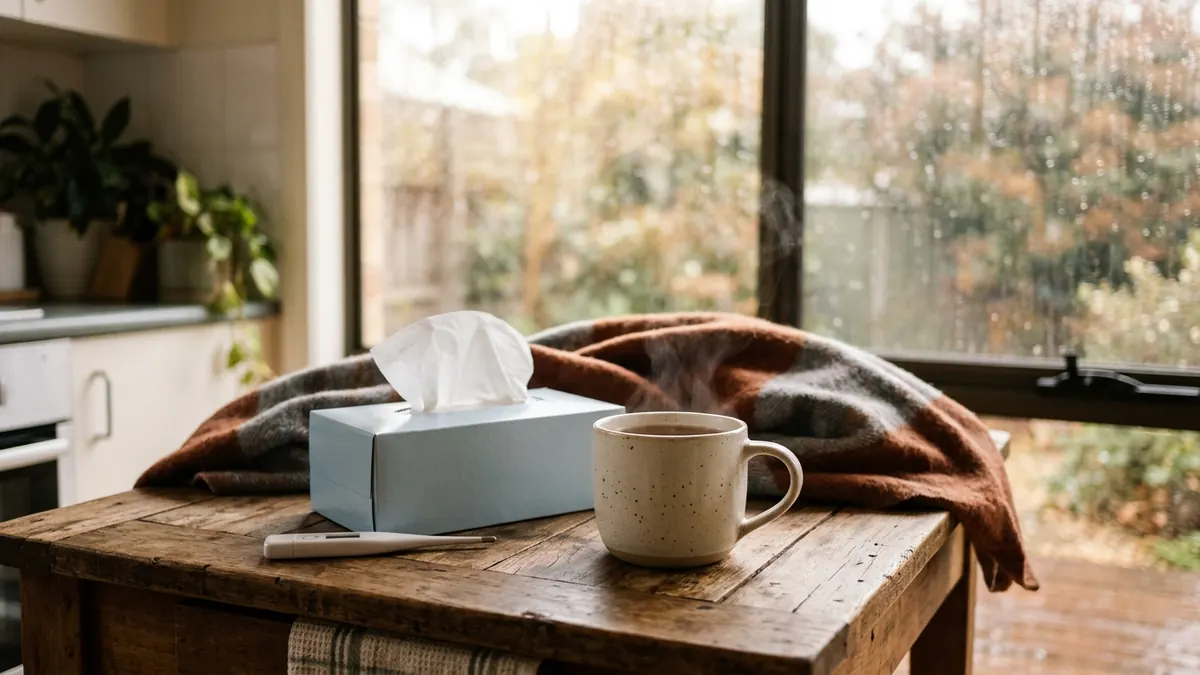
Influenza hits Australia every year, usually peaking between June and September, and it can flatten even healthy adults for a week or more. This guide covers practical ways to reduce your chances of catching it, what recovery looks like, and when to get medical help.
- Annual flu vaccination is recommended for everyone aged six months and over, ideally from April, as protection takes about two weeks to build.
- Hand washing, covering coughs, fresh air and staying home when sick all help limit spread.
- Flu usually starts suddenly with fever, aches and fatigue, but a test can help tell it apart from COVID-19.
- Rest, fluids and pharmacist-checked symptom relief suit most healthy adults; antibiotics don't treat flu.
- Seek urgent help for breathing trouble, chest pain or confusion, and see your GP early if you're at higher risk.
Why flu catches so many people out
Most Australians have had a day where a 'bad cold' turned out to be something much worse. Influenza is a viral infection of the nose, throat and lungs, and it behaves differently from the common cold. It tends to arrive suddenly, and it can leave you in bed with a fever, aching muscles and a dry cough.
In Australia, flu activity usually begins to climb in autumn, peaks through winter and can linger into spring. The timing and severity change from year to year, which is one reason health authorities recommend thinking about prevention before the first people at work start coughing.
This article is general information only. Your GP or pharmacist can give advice that fits your own health, medicines and circumstances.
Vaccination: your first line of protection
Annual influenza vaccination is recommended in Australia for everyone aged six months and over. The viruses that circulate change over time, so the vaccine is updated each year and protection from a previous season shouldn't be relied on.
Who is at higher risk
Some people are more likely to become seriously unwell with flu. This includes adults aged 65 and over, pregnant women, Aboriginal and Torres Strait Islander people, young children, and anyone with a chronic condition such as asthma, diabetes, heart disease or a weakened immune system.
Free vaccines are available through the National Immunisation Program for many of these groups. Eligibility can vary by state and territory, so check with your GP, pharmacist or local health department.
Timing and what to expect
It takes about two weeks after vaccination for protection to build, so getting it from April onwards makes sense for most adults. Pharmacists who are trained and authorised can give flu vaccines to many adults, which makes it easy to fit in during a regular shop.
Mild side effects, such as a sore arm, tiredness or a low-grade temperature for a day or so, are common. The vaccine doesn't give you the flu, but it doesn't offer perfect protection either. Some vaccinated people still catch influenza, though illness is often milder.
Everyday habits that cut the risk
Vaccination works best alongside simple habits. None of these is dramatic, but together they reduce how many virus particles reach your nose, mouth and eyes.
Wash your hands with soap for at least 20 seconds, especially before eating and after public transport, shared keyboards or door handles. Alcohol-based hand rub is a reasonable backup when you're out. Try not to touch your face, which is harder than it sounds.
Cough or sneeze into your elbow or a tissue, bin the tissue straight away and wash your hands. If you're caring for someone with flu, open a window when you can. Fresh air thins out virus particles in a room far more effectively than closing everything up against the cold.
Perhaps the most effective habit is staying home when you're sick. Flu can spread from about a day before symptoms appear until roughly five to seven days afterwards. If you must go out while unwell, a well-fitted mask and a good distance from others help protect people around you.
Flu, cold or COVID-19?
The three can overlap, which makes guessing unreliable. As a rough guide, a cold builds gradually with a blocked or runny nose, sneezing and a scratchy throat, and you can often keep functioning. Flu tends to hit fast: fever, chills, headache, muscle aches, a dry cough and deep tiredness that makes getting out of bed feel like a big task.
COVID-19 can look almost identical to flu. If you have respiratory symptoms, a rapid antigen test is a sensible step, and your GP or pharmacist can tell you what to do next, including whether treatment options might be worth discussing. People in higher-risk groups should contact their GP early rather than waiting to see how things go.
Recovering at home
For most healthy adults, flu improves over about a week. Cough and tiredness can hang around for two weeks or more, so don't be alarmed if your energy returns slowly.
Rest, fluids and food
Rest matters because your body is busy fighting the infection. Cancel what you can, and go back to normal activity gradually. Drink fluids regularly, such as water, diluted juice, broth or oral rehydration drinks if you've been sweating or have a fever. Small, easy meals are fine if your appetite is low.
A cool cloth on the forehead, light bedding and a comfortable room temperature can help if you're running hot. Dry air can irritate a sore throat, so a bowl of water in the room or a warm shower may bring some comfort.
Easing symptoms safely
Over-the-counter medicines can relieve fever, aches and sore throat, but they don't shorten the illness. Paracetamol is commonly used, and some people use anti-inflammatory medicines instead, though these aren't suitable for everyone, including some people with kidney problems, stomach ulcers or asthma. Cold and flu tablets often contain several active ingredients, so it's easy to double up by accident. Ask your pharmacist to check what you're taking against your other medicines.
Antibiotics don't work on viruses, so they won't help flu unless a doctor diagnoses a secondary bacterial infection. Prescription antiviral medicines exist, and a doctor may consider them for some people, usually when started within about 48 hours of symptoms beginning. That's another reason to call your GP early if you're at higher risk.
When to get medical help
Most flu can be managed at home, but some situations need prompt attention. Call 000 or go to an emergency department if you or someone else has trouble breathing, chest pain, blue or grey lips, confusion, a seizure, or is very drowsy and hard to wake.
Book a GP appointment, or call healthdirect on 1800 022 222 for advice, if a fever lasts more than three or four days, symptoms improve then suddenly worsen, you can't keep fluids down, or you notice signs of dehydration such as very dark urine or dizziness when standing. Babies, older adults, pregnant women and people with long-term conditions should seek advice sooner.
Once you feel better, give yourself a few extra days before returning to heavy exercise or a demanding schedule. If you're still short of breath or exhausted after two weeks, it's worth a check-up.
Frequently asked questions
Can I get the flu even after being vaccinated?
Yes. The vaccine reduces your chance of catching influenza and often makes illness milder if you do, but no vaccine is perfect. Vaccination also lowers the risk of serious complications, which is especially relevant for older adults and people with chronic conditions.
How long should I stay home with the flu?
Stay home while you have a fever and significant symptoms, and until you feel well enough to return to normal activities. Many people are contagious for five to seven days. Take extra care around anyone vulnerable, and ask your GP or employer about local guidance if you're unsure.
Is it safe to take flu vaccines during pregnancy?
Yes, influenza vaccination is recommended during pregnancy at any stage and is free under the National Immunisation Program. It helps protect the mother and also gives some protection to the baby in the first months of life. Talk with your GP, midwife or pharmacist if you have questions.
Should I ask my doctor for antibiotics for the flu?
No. Flu is caused by a virus, and antibiotics only work on bacteria. Taking them unnecessarily can cause side effects and contributes to antibiotic resistance. Your doctor will let you know if there are signs of a bacterial complication such as pneumonia.
Medical disclaimer: This information is general in nature and is not a substitute for advice from your doctor or pharmacist. Prescription-only medicines are supplied only against a valid prescription.