How to Store Medicines Safely During an Australian Summer
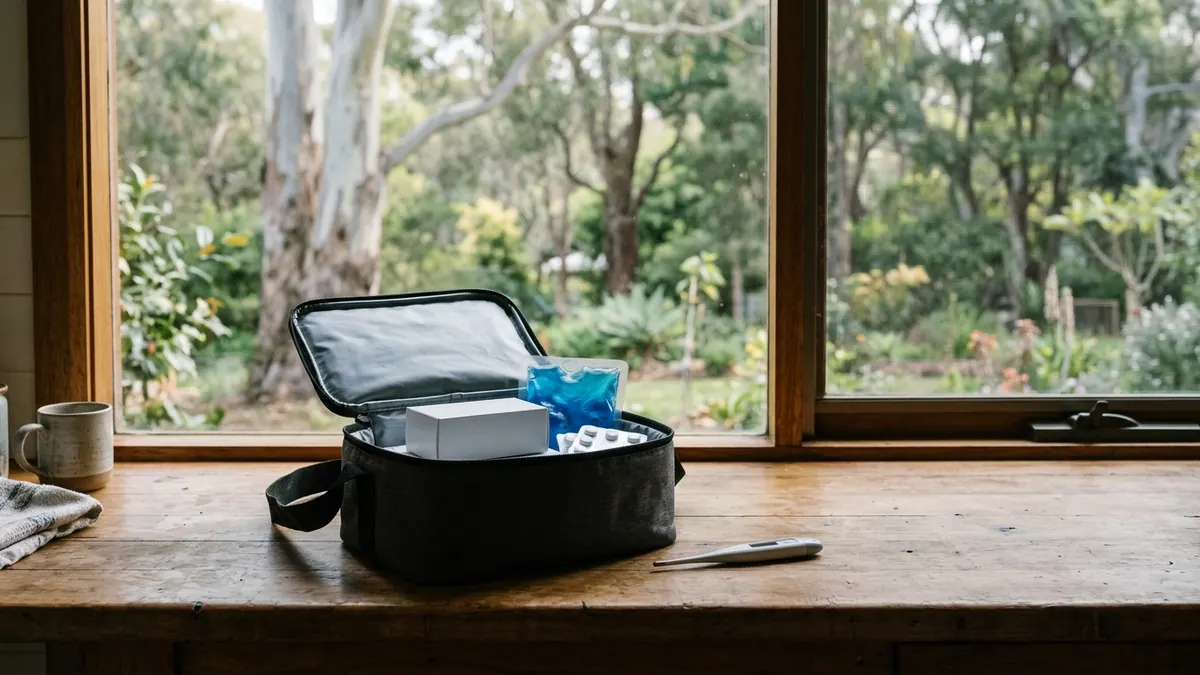
Australian summers can push household temperatures well past what many medicines are designed to handle. This guide covers where to keep your medicines, which ones need the fridge, and when to check with your pharmacist.
- Check the label: most medicines should be kept below 25°C or 30°C, and fridge items between 2°C and 8°C.
- Never leave medicines in a parked car, on a sunny windowsill or in a steamy bathroom.
- Carry medicines in an insulated bag when travelling, and keep ice packs from touching them directly.
- If a medicine looks changed or has been through serious heat, ask your pharmacist before using it.
- Return unwanted or expired medicines to a pharmacy rather than the bin or sink.
Why summer heat matters for medicines
Most tablets, capsules and creams sold in Australia are made to be kept below 25°C, and some below 30°C. The exact figure is printed on the box or label. A Perth afternoon in January, or a Brisbane home with the air conditioning off, can climb past that without anyone noticing.
Heat can break down active ingredients, so a medicine may not work as well as it should. Humidity causes its own problems, making tablets crumble or stick together. A warm day won't ruin everything in your cupboard, and a short, mild rise in temperature usually matters less than several hours in a parked car. Still, repeated exposure adds up, and some products are far more sensitive than others.
Places in the home and car to avoid
The spot where you keep medicines matters as much as the medicines themselves. Convenient is not always cool.
The car
On a 35°C day, the inside of a parked car can pass 60°C within an hour, and a glovebox or boot is no better. Never leave medicines, pens, inhalers or sunscreen in there, even for a quick supermarket run. If you're picking up a prescription on the way home from work, take it inside with you or ask the pharmacy to keep it until your last stop.
The bathroom, kitchen and windowsills
The bathroom cabinet is a common choice, but steam from hot showers makes it humid and warm. The kitchen has the same issue near the stove or kettle. A sunny windowsill can heat a box of tablets far beyond room temperature, even when the air in the house feels fine.
A better option is a cool, dry, shaded place such as a bedroom wardrobe shelf or a high cupboard in the hallway. Keep it out of reach of children, ideally in a lockable box.
Medicines that need the fridge
Some products must be kept at 2°C to 8°C, which is the normal range of a household fridge. Your pharmacist will usually tell you at the counter, and the label often carries a sticker saying 'Store in a refrigerator'. Do not freeze them, and avoid the very back of the fridge where items can ice up.
Insulin and injectable pens
Unopened insulin is generally stored in the fridge. Once a pen or vial is in use, the instructions often allow room-temperature storage for a set number of weeks, but the limit varies by product and summer heat can shorten how long it stays usable. Check the leaflet, and ask your pharmacist if your home regularly goes above the stated temperature. The same applies to other injectable pens prescribed by your doctor.
Liquid antibiotics, eye drops and similar items
Liquid antibiotics that are mixed at the pharmacy usually go in the fridge and are only good for a short time, often 7 to 14 days. Some eye drops and certain pessaries or suppositories also need cooler storage. Read the label each time, because two products that look alike can have different rules.
Not everything cold-looking belongs in the fridge. Adrenaline auto-injectors, for example, are normally kept at room temperature below 25°C and should not be refrigerated. When in doubt, ask.
Travel, road trips and power cuts
Summer holidays and storm season both put medicines at risk. For a road trip, keep your medicines in the cabin with you, not the boot, and use a small insulated bag. For fridge items, add a frozen gel pack but wrap the medicine in a cloth so it doesn't touch the ice directly. Freezing can damage some products as badly as heat does.
If you fly, pack medicines in your carry-on, along with a copy of your prescription or a letter from your doctor. Checked luggage sits in unheated holds and on hot tarmac.
Power outages from storms or fire danger can last many hours. If your fridge goes off, keep the door shut, move medicines to an esky with ice packs if the outage looks long, and call your pharmacist for advice on what is still safe to use. A cheap fridge thermometer helps you see whether the temperature stayed in range.
How to tell if heat has affected a medicine
Some changes are easy to spot. Tablets may look cracked, chalky, speckled or fused together. Capsules can become soft or sticky. Creams might separate or turn runny, and liquids can go cloudy or change colour. Suppositories and pessaries that have melted and reset will often look misshapen.
The harder part is that damage is not always visible. A medicine can lose strength and look perfectly normal. If you know a product has been left somewhere hot for hours, treat it with caution. That is especially true for insulin, inhalers, antibiotics and anything you rely on for a condition where missing a dose matters.
Pressurised inhaler canisters deserve a special mention. They should not be exposed to high heat because the canister can burst. Don't leave them in the sun or in a hot car.
Please don't try to judge by guesswork. Take the product to your pharmacist, who can check the storage conditions and tell you whether it should be replaced.
Simple habits that make a difference
A few routines are enough for most households. Keep medicines in their original packaging so the storage instructions and expiry date stay with them. Write the date you opened any bottle or pen on the label. Check the cupboard at the start of summer and again in autumn, removing anything out of date.
Unwanted or expired medicines can be returned to any community pharmacy for safe disposal at no cost through the Return Unwanted Medicines program. Please don't flush them or put them in the bin.
If you take several medicines, ask your pharmacist about the best storage for each one, and whether a dose administration aid is suitable. Your GP or pharmacist can also advise if a hot home, a long trip or an unreliable power supply makes your current arrangements risky.
Frequently asked questions
Can I keep all my medicines in the fridge to be safe?
No. Many medicines are meant to be stored at room temperature, and cold or damp conditions can affect some of them. Adrenaline auto-injectors are one example. Only refrigerate items when the label or your pharmacist says so.
How long can medicines sit in a hot car before they are affected?
There is no single safe time. A car can become very hot within an hour, and the effect depends on the medicine. If something has been left in a hot car, don't assume it's fine. Show it to your pharmacist.
What should I do if my fridge stops working and I have insulin in it?
Keep the fridge door closed, move the insulin to an insulated bag with cold packs if the outage will be long, and contact your pharmacist or doctor promptly. They can advise whether the supply is still usable or needs replacing.
Is it safe to take medicine that has changed colour in the heat?
It's best not to. Colour or texture changes can mean the medicine has degraded. Ask your pharmacist to check it, and don't take it in the meantime if you're unsure.
Medical disclaimer: This information is general in nature and is not a substitute for advice from your doctor or pharmacist. Prescription-only medicines are supplied only against a valid prescription.