Taking prescription medicines overseas: an Australian checklist
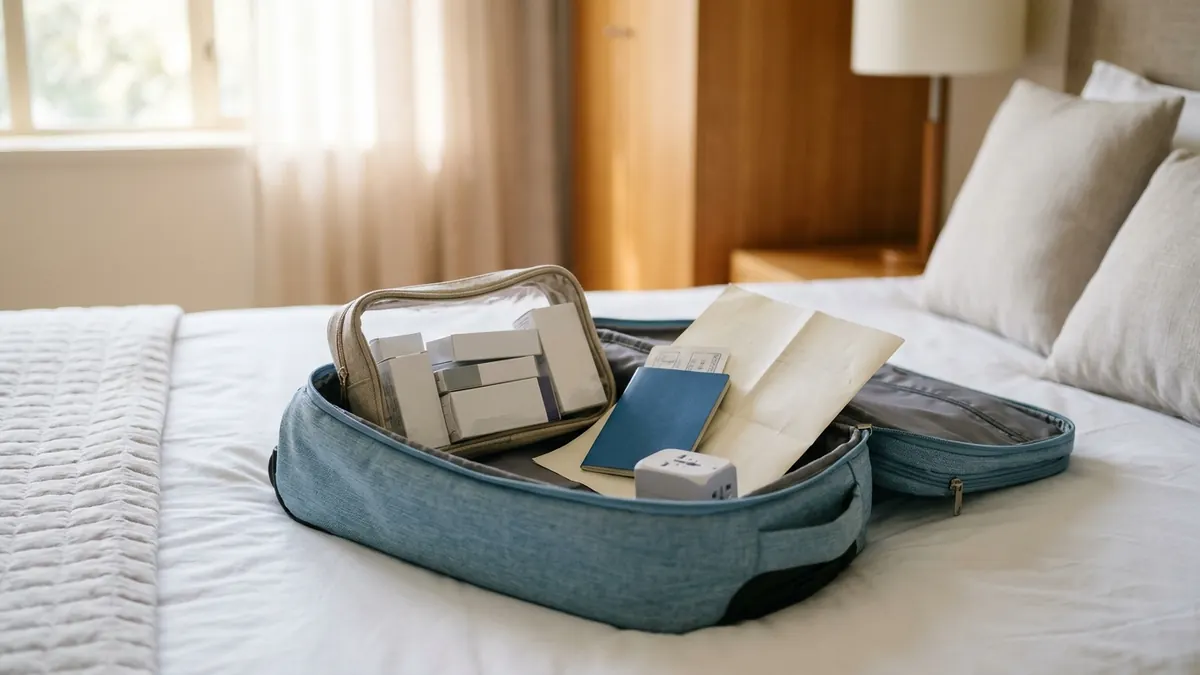
Medicines that are routine at home can be restricted, or even banned, in another country. A little planning before you fly helps you avoid problems at the border and keeps your treatment on track.
- Speak to your GP and pharmacist six to eight weeks before you leave.
- Check the import rules for your destination and any transit countries, as some common medicines are restricted.
- Carry medicines in your cabin bag, in original labelled packaging, with a doctor's letter listing generic names.
- Keep insulin and other temperature-sensitive medicines out of the hold, and plan dose timing across time zones.
- Declare medicines when you return to Australia.
Start with your pharmacist and GP early
Aim to have this conversation six to eight weeks before you leave. That gives you time to get a letter written, check whether any of your medicines need a permit, and sort out extra supply if your treatment allows it.
Bring a full list of everything you take, including over-the-counter products and supplements. A pharmacist can check each one against your destination, flag anything likely to cause trouble, and talk through how to handle doses across time zones. If you have a long-term condition such as diabetes, epilepsy or heart disease, your GP should also be part of the planning.
Check the rules for every country on your route
Australian approval does not carry over to other countries. Each one decides which medicines it allows, how much you can bring, and what paperwork you need. A cold and flu tablet or a sleep aid that you buy at the pharmacy here might be restricted somewhere else.
Controlled and restricted medicines
Some medicines are treated more strictly because of their potential for misuse. These include strong pain relievers such as opioids, stimulant medicines used for ADHD, some sleeping tablets and certain anti-anxiety medicines. Some countries, Japan and the United Arab Emirates among them, are known for tight rules. Some also restrict products containing codeine or pseudoephedrine.
In Australia, the Office of Drug Control has information on travelling with controlled medicines, and you may need a permit or other approval in some cases. Your destination's embassy or consulate is the best source for its own import rules. Smartraveller can point you to the right contacts. Rules change, so check close to your departure date rather than relying on a friend's experience from a few years ago.
Transit stops count too
A stopover of a few hours can still put you under that country's laws, especially if you leave the airport or your bags are screened. If your route includes several countries, check each one.
Pack so that everything is easy to identify
Keep medicines in their original packaging, with the pharmacy label showing your name, the medicine name and the dose. Decanting tablets into a weekly organiser might be handy at home, but it can cause questions at security. If you want to use one, take the original boxes as well.
Carry your medicines in your cabin luggage. Checked bags can be delayed, lost or exposed to extreme temperatures. It also helps to split your supply, with most in your main carry-on and a smaller backup in a travel companion's bag or another compartment. If one bag goes missing, you are not left without anything.
Paperwork worth carrying
A letter from your doctor on letterhead is the most useful document you can have. It should list your diagnosis, each medicine by its generic (active ingredient) name, the dose and the reason you need it. Brand names differ between countries, but active ingredients are widely understood.
Also keep a copy of your prescriptions, either printed or on your phone. If you carry needles, syringes, pen devices or a continuous glucose monitor, the letter should mention them. Your airline may also have its own requirements, so check before you fly.
Medicines that need extra care
Some medicines are sensitive to temperature, and some have timing needs that a long-haul flight can complicate.
Insulin and other refrigerated products
Never put insulin in the hold, as it can freeze. Keep it in your cabin bag, and ask your pharmacist about insulated cooling pouches that do not rely on loose ice. Once in use, many pens and vials can be kept at room temperature for a set period, but that period depends on the product. Check the leaflet or ask your pharmacist. At your destination, find out whether your accommodation has a fridge you can rely on.
Time zones and dosing
If you take a medicine at the same time each day, crossing several time zones can leave you unsure when your next dose is due. Do not guess. Ask your doctor or pharmacist to help you write out a simple plan. It is especially important for medicines where timing matters, such as insulin, anticoagulants, epilepsy medicines and the oral contraceptive pill.
How much should you take?
Take enough for the entire trip, plus extra in case of delays. A few spare days is a sensible buffer. Many travellers also carry a little extra in case their return is postponed.
Under the PBS, there are limits on how much subsidised medicine can be taken overseas for personal use, and a maximum of three months' supply is the usual guide. If you will be away longer, talk to your doctor about your options. Do not plan to restock overseas without checking first, as the same medicine may not be sold there, may have a different name or strength, or may require a local prescription.
Travel insurance, health and coming home
Tell your insurer about any existing medical conditions. A policy that excludes them could leave you with large bills if you fall ill. Check also whether lost or stolen medicines are covered, and whether the policy includes emergency replacement.
If you run out or lose your medicines, contact a local doctor or pharmacist, or your insurer's assistance line. Having your generic medicine names and your doctor's letter on hand will make that conversation much easier. Do not substitute someone else's medicine or take a product you do not recognise.
When you return, you must declare any medicines on your incoming passenger card. Bring them in their original packaging, and keep the paperwork handy in case a Border Force officer asks to see it. If you picked up any medicines overseas, check what is allowed back into Australia before you pack them.
Frequently asked questions
Do I need a doctor's letter for every medicine?
Not always, but it is a sensible habit. A letter is especially useful for controlled medicines, injectables or anything that could look unusual at security. Your pharmacist can tell you which of your medicines are most likely to need one.
Can I post medicines to myself overseas?
This is risky. Many countries restrict or seize medicines sent through the mail, and some medicines are illegal to post. Check the rules with the destination country's authorities and speak with your pharmacist before trying it.
What if my medicine is banned in the country I am visiting?
Talk to your GP well before you go. They may be able to suggest an alternative that is allowed, or help you apply for any approval the country offers. Do not simply leave it at home or stop taking it without medical advice.
Can I buy my usual medicines overseas if I run out?
Sometimes, but it is not guaranteed. The same medicine may be sold under a different name or strength, or may need a local prescription. Carrying the generic name and a doctor's letter helps a local pharmacist or doctor work out a suitable option.
Medical disclaimer: This information is general in nature and is not a substitute for advice from your doctor or pharmacist. Prescription-only medicines are supplied only against a valid prescription.